How to Choose the Best Coffee Robot for Your Business?

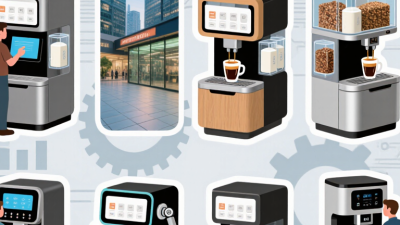
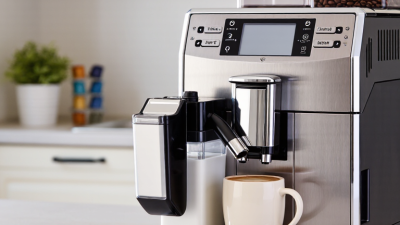
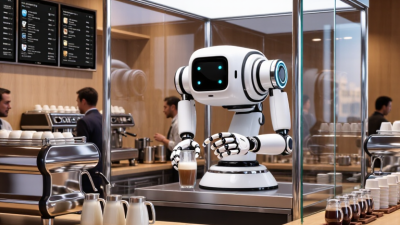
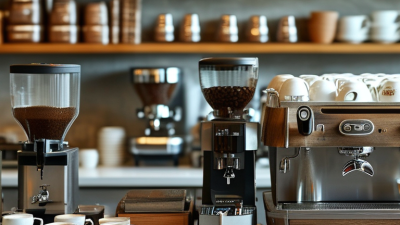
Choosing the right Coffee Robot can reshape service speed, drink consistency, and daily operating costs. However, the most impressive machine is not always the best fit for your business. A busy hotel lobby needs different capabilities than a quiet boutique café. Your decision should reflect customer volume, menu complexity, available floor space, staff skills, and local service support.

Start by observing the real workflow. How many drinks must the system prepare during a morning rush? Can it handle milk alternatives, custom temperatures, and frequent cleaning without disrupting service? A robot with a glossy interface may still disappoint if ingredient refills take too long. Small details matter, such as cup clearance, noise near customer seating, and the time needed to recover from an error.

Look beyond demonstrations. Ask suppliers for documented output rates, maintenance schedules, warranty terms, training plans, and references from comparable businesses. Food-contact materials should be clearly identified, and sanitation procedures must be practical for your team. Regulatory requirements also vary by location, so professional installation and compliance checks deserve attention.

The numbers need honesty. Calculate equipment costs, consumables, labor changes, energy use, repairs, and expected downtime. A lower purchase price may hide expensive service calls. A premium model may not earn its cost in a low-volume location. Test the machine with your actual cups, recipes, and busiest demand period when possible. No option is perfect. The strongest choice is the one that performs reliably, remains supportable, and matches your customers’ expectations over time.
How to Choose the Best Coffee Robot for Your Business?

Quantify Demand: 67% of U.S. Adults Drank Coffee Daily in 2024 (NCA)

How to Choose the Best Coffee Robot for Your Business?

Quantify Demand: 67% of U.S. Adults Drank Coffee Daily in 2024 (NCA)

Coffee demand deserves a measurable equipment plan. The National Coffee Association’s Spring 2024 National Coffee Data Trends report found that 67% of U.S. adults drank coffee daily. That percentage changes the equipment question. Demand is not theoretical. It appears as morning queues, repeated milk orders, and empty cups before lunch.

The USDA’s Coffee: World Markets and Trade report records U.S. coffee imports above 20 million 60-kilogram bags annually. This scale supports strong consumption, but it does not guarantee sales at your location. Measure transactions by 15-minute intervals for two weeks. Then compare peak demand with a robot’s hourly output, recovery time, and ingredient capacity. Check cleaning steps, cup storage, payment integration, and service response. A compact unit may outperform a larger one in a narrow lobby. Bigger is not always better.

Tips: Start with a small pilot. Track drinks sold, waiting time, waste, and failed orders. Ask staff where the workflow breaks. A robot can serve quickly, yet still disappoint customers if customization is limited. My own planning bias would favor impressive speed, but reliability often matters more. Leave space for refilling and human assistance. Forecasts are useful, not perfect.

Set Capacity Targets Using Professional-Service-Robot Data (IFR 2023)

How to Choose the Best Coffee Robot for Your Business?

The IFR 2023 report recorded nearly 158,000 professional service robots sold worldwide in 2022. This figure shows strong market momentum, but it is not coffee-specific. Use it as a capacity reference, not a promise of sales. A coffee robot should match your busiest fifteen-minute period, not your quiet average. Count expected orders, drink preparation time, cleaning pauses, and payment delays. For example, 30 drinks in fifteen minutes requires two drinks per minute. That target may expose a difficult gap between marketing claims and real service conditions.

Begin with a practical capacity test. Measure drinks per hour under normal conditions, including milk refills and cup changes. Then test peak demand with one staff member nearby. Small delays matter. A robot producing 80 drinks hourly may deliver fewer usable orders during a lunch rush. Record rejected orders, remake rates, queue length, and cleaning time. Review the data after several operating days. Your first target may be wrong.

Tips: Set a realistic utilization rate below maximum capacity. Ask for verified test results, maintenance records, and safety documentation. Compare energy use and ingredient waste, not only output. Watch the handoff area; crowded counters can cancel the benefit of faster production. Keep a manual service plan for faults. That backup is often overlooked.

Professional-Service-Robot Demand Benchmarks for Coffee-Robot Capacity Planning

IFR reported almost 158,000 professional service robots sold worldwide in 2022. Transportation and logistics was the largest application, while hospitality ranked second. These benchmarks can help coffee businesses define realistic deployment and service-capacity targets.

For a coffee robot, hospitality demand is the closest reference point. Capacity planning should focus on peak-hour orders, operating hours, replenishment intervals, and the number of locations supported rather than using total robot sales as a direct sales forecast.

Source: International Federation of Robotics, World Robotics 2023, Professional Service Robots. Figures are rounded as reported.

Test Coffee Quality Against SCA’s 18–22% Extraction Guideline

How to Choose the Best Coffee Robot for Your Business?

Test Coffee Quality Against SCA’s 18–22% Extraction Guideline

A coffee robot should be judged by extraction, not only speed or appearance. The Specialty Coffee Association’s Brewing Control Chart identifies 18–22% extraction as the common quality target. This range reflects how much soluble material the drink removes from ground coffee. Too little extraction can taste sharp and thin. Too much may create bitterness and dryness.

Measure every batch.

Use a calibrated refractometer, consistent coffee doses, and recorded brew times. Check water temperature, grind size, pressure, and beverage weight. A reliable robot should repeat similar results during the morning rush. According to the 2024 National Coffee Data Trends report, 67% of American adults drank coffee on the previous day. Consistency therefore affects many daily customer experiences. A machine that produces one excellent cup and five uneven cups is not operationally strong.

My own testing would include busy and quiet periods. Heat stability can change extraction. Cleaning habits can change flavor, too. This is where selection becomes less perfect. Laboratory results may not match a real café counter. Ask for extraction data from multiple cycles, not a single demonstration. Taste the coffee beside the measurements. The number matters, but flavor confirms whether the robot is truly serving a balanced cup.

Calculate ROI from Labor Costs, Throughput, Uptime, and Payback

Choosing a coffee robot starts with measurable economics, not novelty. The U.S. Bureau of Labor Statistics reported a median hourly wage of $14.20 for food preparation and serving occupations in May 2023. Add payroll taxes, benefits, training, and turnover, and the real labor cost becomes higher. The National Restaurant Association’s 2024 industry report projected U.S. restaurant sales above $1 trillion, while operators continued reporting serious labor pressure. Use your own payroll records before trusting any sales pitch.

Measure how many drinks the system produces during real peaks. A machine rated for 120 cups per hour may deliver less when refilling milk, cleaning nozzles, or handling custom orders. Track completed drinks, not advertised speed.

Uptime matters just as much. Record operating hours, service delays, and recovery time for eight to twelve weeks.

A simple model is: annual benefit equals avoided labor cost plus incremental gross profit, minus maintenance and consumables.
Payback equals installation cost divided by monthly net benefit.
For example, $60,000 invested with $5,000 monthly net benefit pays back in twelve months. Maybe. That estimate fails if demand is weak.

Test the robot beside actual staff during morning rushes. Compare queue length, remakes, waste, and customer abandonment. Industry reports provide context, but your transaction data decides the investment.

Include financing costs and a replacement reserve. Otherwise, the spreadsheet looks precise while hiding operational risk.

Verify Safety, Compliance, Maintenance, and Vendor Support Coverage

How to Choose the Best Coffee Robot for Your Business?

A coffee robot should be judged beyond speed, appearance, and menu capacity. Start with documented safety controls. Ask whether the system includes emergency stops, guarded moving parts, electrical protection, and safe cleaning access. ISO 10218 and ISO/TS 15066 provide useful benchmarks for industrial and collaborative robot safety. Compliance is not a certificate on a wall. It must match your site, workflow, and staff training.

Food-contact surfaces require equal attention. Check materials, sealing, drainage, and temperature controls against applicable food-equipment requirements, such as NSF/ANSI 4 and NSF/ANSI 51. Local inspection rules may differ. Verify them before installation. The International Federation of Robotics reported about 205,000 professional service robots sold worldwide in 2023. That growth increases choice, but it also makes technical verification more important. A polished demonstration can hide difficult maintenance.

Maintenance evidence matters. Request service intervals, spare-parts availability, remote diagnostics, and average response times. Ask who arrives when the grinder jams during a morning rush. A service-level agreement should define coverage hours, repair targets, training, and escalation routes. Industry reports often measure installations, not downtime. That gap deserves attention. Test cleaning in real conditions, with wet hands and a full waste bin. Watch the operator, not only the machine. A robot that needs specialist support for every small fault may reduce labor, yet increase operational risk. Review three months of pilot data before committing. Mistakes will happen. Your vendor’s response matters more than perfect promises.