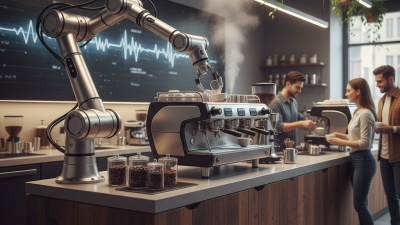
7 Tips for Buying a Robot Barista For Sale?
A Robot Barista For Sale can look impressive behind glass, but appearance is not performance. The real test begins when morning demand peaks, milk needs replenishing, and a customer changes the order. Buyers must examine speed, drink consistency, cleaning requirements, software support, and total ownership costs. A polished demonstration is useful. It is not enough.
Industry data shows why this category deserves careful attention. The International Federation of Robotics reported 541,302 industrial robots were installed worldwide in 2023. This figure does not measure coffee robots directly, but it confirms wider automation momentum. Grand View Research also projects strong growth in the global service robotics market through 2030. These reports offer context, not a guarantee of profitability. A coffee robot still depends on location, menu design, staff training, and reliable maintenance.
Pazzo Coffee founder Henry Hu described the company’s purpose this way: “We’re not trying to replace baristas; we’re trying to make coffee more accessible.” That idea matters when evaluating a Robot Barista For Sale. The machine should improve service, not create a shiny bottleneck. Watch it produce drinks during a busy, realistic trial. Listen for grinding noise. Check the rinse cycle. Inspect the cup handoff area. Small details reveal operational weakness.
Some assumptions may be wrong. Automation may reduce labor pressure, yet it can introduce technical downtime and unfamiliar service costs. The following seven tips examine those trade-offs carefully, using practical questions, supplier evidence, and measurable performance standards. Convenience matters. Reliability matters more.
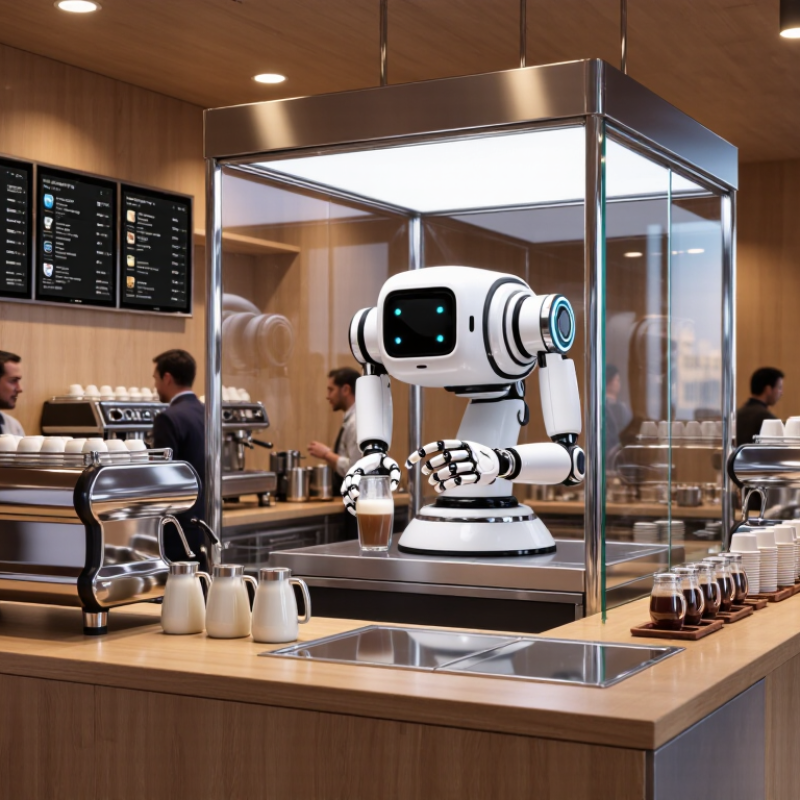
Define Your Robot Barista’s Intended Use and Service Environment
Before comparing a robot barista for sale, define the job it must perform. A self-service kiosk in an office needs different engineering from a staffed café counter. The International Federation of Robotics reported nearly 205,000 professional service robots sold globally in 2023, a 30% annual increase. Growth is real, but suitability matters more than novelty.
In a busy transport hub, measure peak demand by ten-minute intervals, not daily cups. Check brewing speed, recovery time, queue space, noise, and payment integration. For offices, prioritize compact dimensions, low noise, scheduled cleaning, and simple refilling. Outdoor or semi-outdoor sites require protection from dust, heat, humidity, and unstable power. Confirm water filtration, drainage, ventilation, and floor loading before purchase. Small omissions become expensive.
Service conditions also shape staffing. The machine may need a trained attendant for ingredient loading, sanitation, fault recovery, and customer assistance. Include maintenance schedules, spare-parts planning, and remote-support response times in the quotation. Food-contact surfaces should be easy to inspect and clean, with records supporting local hygiene requirements. The National Coffee Association’s Spring 2024 report found that 67% of U.S. adults drank coffee in the past day, yet demand does not guarantee robot utilization. Pilot the unit during real rush periods. My first estimate might be wrong. Measure waste, wait time, rejected payments, and remade drinks before expanding.
Compare Brewing Features, Drink Range, and Customization Options
Buying a robot barista for sale requires more than checking its speed. Start by comparing brewing accuracy, not just advertised output. Look for stable water temperature, adjustable pressure, consistent dosing, and a grinder that supports different bean sizes. A clear cleaning cycle matters too. Tiny details matter.
The National Coffee Association’s Spring 2024 National Coffee Data Trends report found that 67% of American adults drank coffee within the past day. Its specialty-coffee findings also show strong demand for espresso-based and customized drinks. Therefore, test espresso, Americano, cappuccino, latte, iced coffee, and milk-free recipes before purchasing. A narrow menu may disappoint busy customers. Check whether users can adjust strength, milk volume, temperature, ice, and syrup levels. Saveable recipes are useful during morning rushes. However, too many settings can confuse staff and slow service.
The Specialty Coffee Association’s Coffee Value Assessment framework highlights flavor, aroma, texture, and overall experience. Use these points when judging a machine’s drink range. Request repeated samples, not one impressive cup. Compare extraction time, crema, milk texture, and flavor consistency across ten drinks. Review the interface, refill capacity, waste handling, and remote error alerts. Ask about technician response times and replacement parts. My practical concern is often overlooked: customization may look advanced but feel limited after installation. A trial period can expose that weakness. Choose measurable performance over futuristic appearance.
7 Tips for Buying a Robot Barista For Sale
Compare brewing features, drink range, cleaning requirements, and customization options against these practical coffee-preparation reference points. Exact specifications vary by machine, so verify each value with the seller before purchasing.
A suitable robot barista should operate near established espresso and milk-preparation targets: brewing water around 90–96°C, espresso contact time around 25–30 seconds, and milk service temperature around 55–65°C. Also compare the number of drink recipes, adjustable parameters, and required cleaning cycles before making a purchase.
Check Automation Performance, Safety Systems, and Ease of Operation
7 Tips for Buying a Robot Barista For Sale
Check Automation Performance, Safety Systems, and Ease of Operation
A reliable robot barista should produce consistent drinks during busy periods. Ask for a live demonstration, not only a polished video. Watch the machine prepare several orders with different milk levels and cup sizes. Check its speed, accuracy, and recovery after a mistake. Review the control software, order-screen clarity, and staff training time. Simple operation matters. A new employee should understand the basic workflow within a short session.
Examine safety systems closely. Look for emergency-stop controls, guarded moving parts, spill protection, and automatic shutdown features. Confirm that food-contact components are easy to remove and sanitize. Ask for maintenance schedules, inspection records, and documented safety testing. Also check whether the system provides alerts when water, ingredients, or cleaning supplies run low. Reliable data logs can help operators identify repeated faults. Do not accept vague promises.
Consider installation space, noise, energy use, and technical support. Measure doorways and counter clearance before purchasing. Ask how quickly replacement parts arrive and who performs repairs. I would test cleaning after a long service period, because demonstrations often hide this burden. That test may feel slow. It is worth it. One overlooked issue is accessibility for shorter staff or users with limited mobility. A practical purchase should serve real people, not just impress visitors. Compare the machine’s performance with your expected daily volume, then leave room for human supervision and occasional imperfect results.
Evaluate Pricing, Maintenance Needs, Warranty, and Technical Support
Sticker prices can make a robot barista look affordable. Your real budget must include installation, plumbing, electrical work, software, cups, ingredients, and staff training. Ask for a five-year ownership estimate, not only the purchase quote. Request hourly output figures under busy conditions, because laboratory performance can feel misleading. Energy use and payment-system fees also deserve a line on the spreadsheet. Small costs become loud.
Maintenance affects both profit and drink consistency. Confirm daily cleaning tasks, weekly inspections, and replacement intervals for pumps, seals, sensors, and grinders. A machine needing two hours of cleaning each night may not suit a small café. Ask whether ordinary staff can complete routine work safely. Also check local access to qualified technicians. My first cost estimate would probably be too optimistic if I ignored downtime.
Read the warranty exclusions carefully. Some agreements cover parts but exclude labor, transport, software faults, or damage caused by poor water quality. Clarify coverage length and the process for reporting failures. Technical support should provide response times, remote diagnostics, training materials, and emergency assistance. Ask how quickly common parts can arrive in your region. A short demonstration can reveal more than polished sales language: simulate a jam, network outage, and cleaning alert. Notice whether the support team explains the problem clearly or simply recommends replacing expensive components. Get every promise in writing.
Confirm Supplier Reliability, Compliance, Delivery, and Installation Services
Buying a robot barista requires more than watching a smooth coffee demonstration. The International Federation of Robotics reported nearly 200,000 professional service robots sold worldwide in 2023. Demand is real. Support quality varies. The National Coffee Association’s Spring 2024 report found that 67% of American adults drank coffee the previous day, increasing pressure on reliable service equipment.
Tip 1: Confirm supplier reliability. Request three operating references, factory audit records, warranty terms, and replacement-part availability. A polished demo can still hide weak support. Tip 2: Check compliance before payment. Ask for electrical certifications, food-contact documentation, sanitation procedures, and local approval requirements. Documents should match the exact model and voltage. Tip 3: Test performance with your menu. Record drink time, cleaning time, error frequency, and output during a busy hour. Marketing numbers are not enough.
Tip 4: Define delivery conditions in writing. Confirm production lead time, packaging, insurance, customs responsibility, and spare-part shipping. Tip 5: Require a site survey. Measure doorways, counter depth, drainage, power capacity, water filtration, and network access. Small omissions become expensive. Tip 6: Secure professional installation and commissioning. Technicians should calibrate grinders, test recipes, train staff, and provide sanitation checklists. Tip 7: Negotiate after-sales service. Include response times, remote diagnostics, preventive maintenance, software updates, and escalation contacts. I would also request a realistic uptime report, not a perfect promise. Reliability is often learned after installation.
| Tip | Buying Dimension | What to Verify | Evidence or Measurable Requirement | Key Questions for the Supplier | Priority |
|---|---|---|---|---|---|
| 1 | Supplier Reliability | Assess whether the supplier has the operational capacity and technical experience to support the equipment after purchase. |
|
How many comparable systems have been installed, and what support response time is included in the contract? | High |
| 2 | Food-Safety and Regulatory Compliance | Confirm that the robot, beverage-contact components, electrical system, and operating process meet the requirements of the intended market. |
|
Which standards and local approvals apply to this exact model and configuration? | High |
| 3 | Drink Quality and Menu Capability | Check whether the machine can consistently produce the beverages, recipes, serving sizes, and customization options required by the site. |
|
Can the supplier conduct a factory acceptance test using our recipe specifications and consumables? | High |
| 4 | Capacity, Availability, and Cleaning | Compare the expected demand with the robot's realistic throughput, refill requirements, cleaning time, and recovery time after faults. |
|
What is the tested hourly output, and how does performance change when cleaning, refilling, and minor stoppages are included? | High |
| 5 | Total Cost of Ownership | Evaluate the complete cost rather than comparing only the purchase price. |
|
Which costs are recurring, which parts are consumable, and what is the estimated annual maintenance budget? | High |
| 6 | Delivery, Site Preparation, and Acceptance | Make sure the delivery plan matches the site's physical, electrical, water, network, and access conditions. |
|
Who is responsible for transport damage, customs clearance, unloading, site preparation, and final acceptance? | High |
| 7 | Installation, Training, and Long-Term Service | Confirm that commissioning and staff training are included and that service remains available after the warranty period. |
|
How quickly can a technician respond, which parts are stocked locally, and what happens when remote support cannot resolve a fault? | High |
Related Posts
-
What is a Robot Coffee Barista and How Does It Work?
-
China Top 10 Automated Coffee Shop Manufacturers
-
China Best Coffee Robot Barista Supplier for Global Buyers?
-
Why Choose a Coffee Making Robot for Your Business?
-
Top 10 Automated Barista Machines for Coffee Lovers?
-
The Future of Autonomous Dining: Exploring the Unmanned Coffee Shop Revolution